How to do a newborn photoshoot at home with your phone
· AI Baby Photoshoot
A newborn photoshoot at home asks for less than most people expect. You need one bright window, a plain blanket, a phone and more patience than equipment. The photos parents keep from these weeks are rarely the complicated ones. They are the close, quiet ones: a hand, a yawn, a tiny foot in an adult palm.
This guide sticks to light, props, angles and timing. For anything about your baby's comfort or care, go with what your family and your doctor advise, and let the photos fit around that.
Find the best window in your home
Walk through the house in the morning and look for the window that gives bright light without direct sun falling on the bed or floor. A north-facing window, or any window with a thin white curtain, usually does this. Turn off the room lights so you are not mixing yellow bulb light with daylight.
Place the baby so the light comes from the side, across the face from forehead to chin. Light coming from below the chin makes odd shadows, and light from directly behind leaves the face dark. If one side of the face looks too shadowed, hold a white towel or a sheet of white card on that side to bounce some light back.
Simple props and backdrops that photograph well
Newborns are small, so the backdrop only needs to be about a metre wide. Plain, soft and pale works better than anything patterned, because the pattern competes with a very small face.
- A cream, white or light grey blanket with some texture, such as a knitted shawl or a cotton dohar
- A plain bedsheet pulled smooth over the bed, with wrinkles tucked out of the frame
- A muslin swaddle in a single colour
- A cane basket or moses basket the baby already uses, lined with their own blanket
- One small personal object: a grandparent's shawl, a knitted cap, the hospital name band
- Your own hands, which are the best prop for showing how small the baby is
Five shots worth getting
There is no need to copy the curled-up poses you see from studios. Those are done by trained newborn photographers. At home, photograph your baby the way they already are, in the cot, on the bed or in someone's arms.
- From above: the whole baby on the blanket, phone held flat and parallel to the bed.
- The details: fingers, toes, ear, the swirl of hair on the crown. Move the phone closer instead of zooming.
- In arms: the baby against a parent's chest or shoulder, cropped so you see the adult's hands and chin but not the whole face.
- The scale shot: a tiny hand wrapped around one adult finger, or feet resting in an open palm.
- The room: one wider photo of the cot or corner where the baby spends these weeks, because that room will change.
Timing and patience
Many parents find the first two or three weeks are the easiest time for these photos, simply because the baby is at their smallest and you are at home anyway. If that window has passed, the photos are just as worth taking at six or eight weeks.
Choose a moment when your baby is calm and settled, and stop the moment they are not. Ten minutes is a full session. If today does not work, tomorrow has the same window and the same light. Spreading the photos over three or four short tries across a week is usually easier on everyone than one long attempt.
Keep the phone and the blanket in the same spot for that week, so there is nothing to set up when a quiet moment arrives.
Phone settings that help
Keep the flash off and the phone on silent, so the shutter sound does not startle anyone. A few small habits make the pictures cleaner.
- Wipe the lens before you start.
- Tap on the baby's face to focus, then slide the brightness down slightly if the blanket looks washed out.
- Use the main lens and step closer for detail shots. Digital zoom makes photos grainy.
- Try portrait mode for the in-arms shot, which softens the background.
- Take several frames of each shot. Newborn expressions change every second.
Styled newborn scenes without the styling
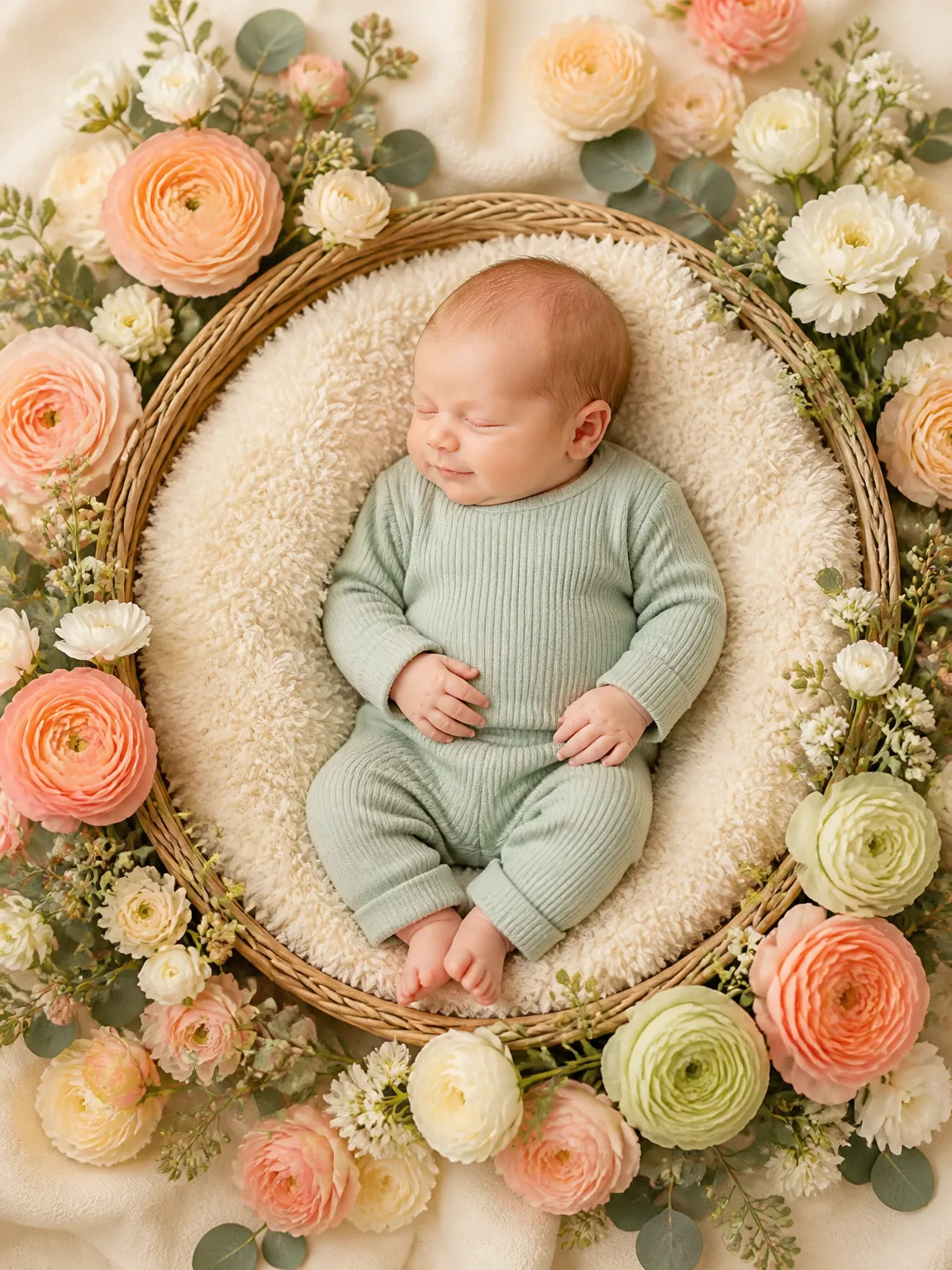
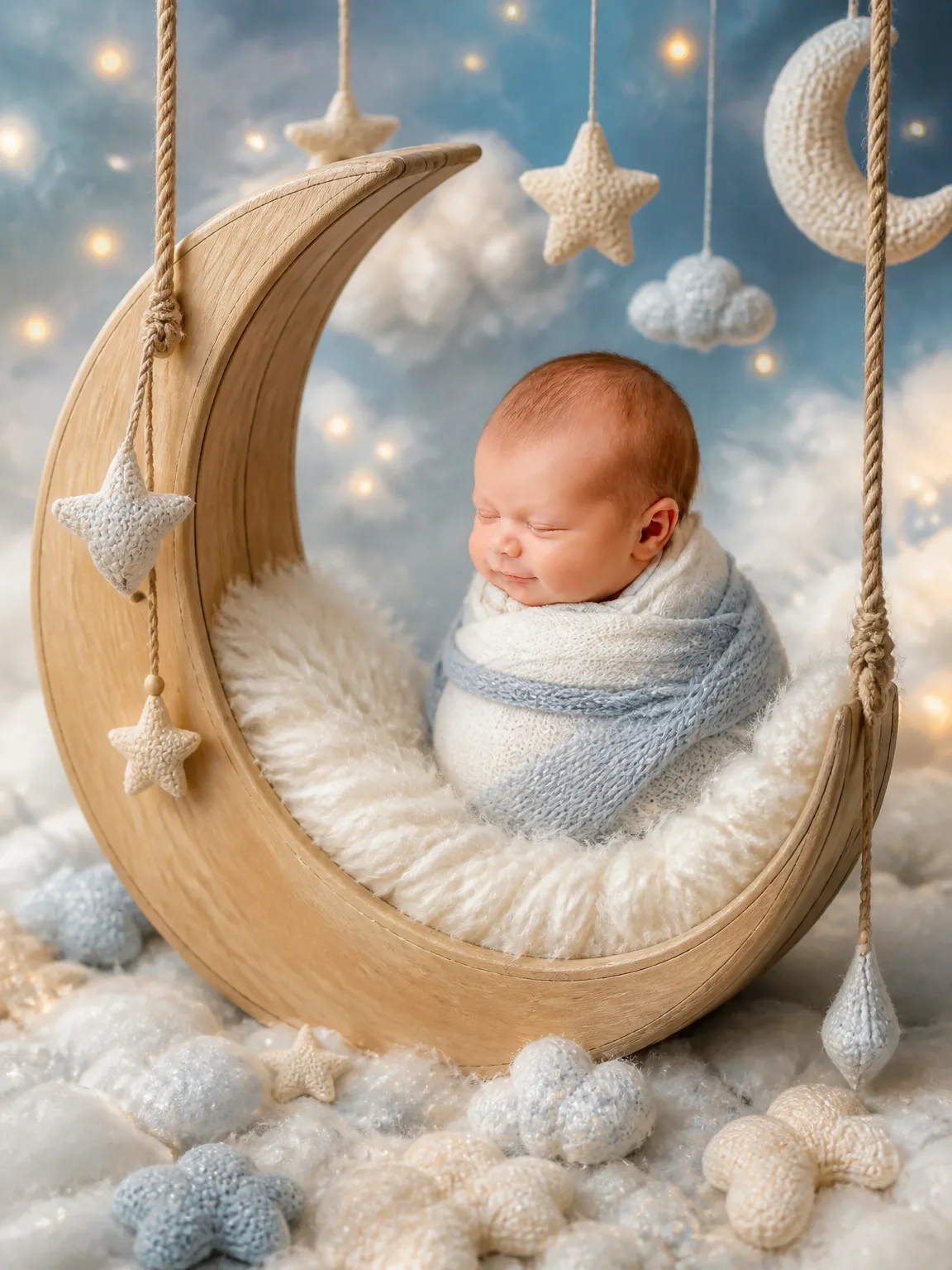
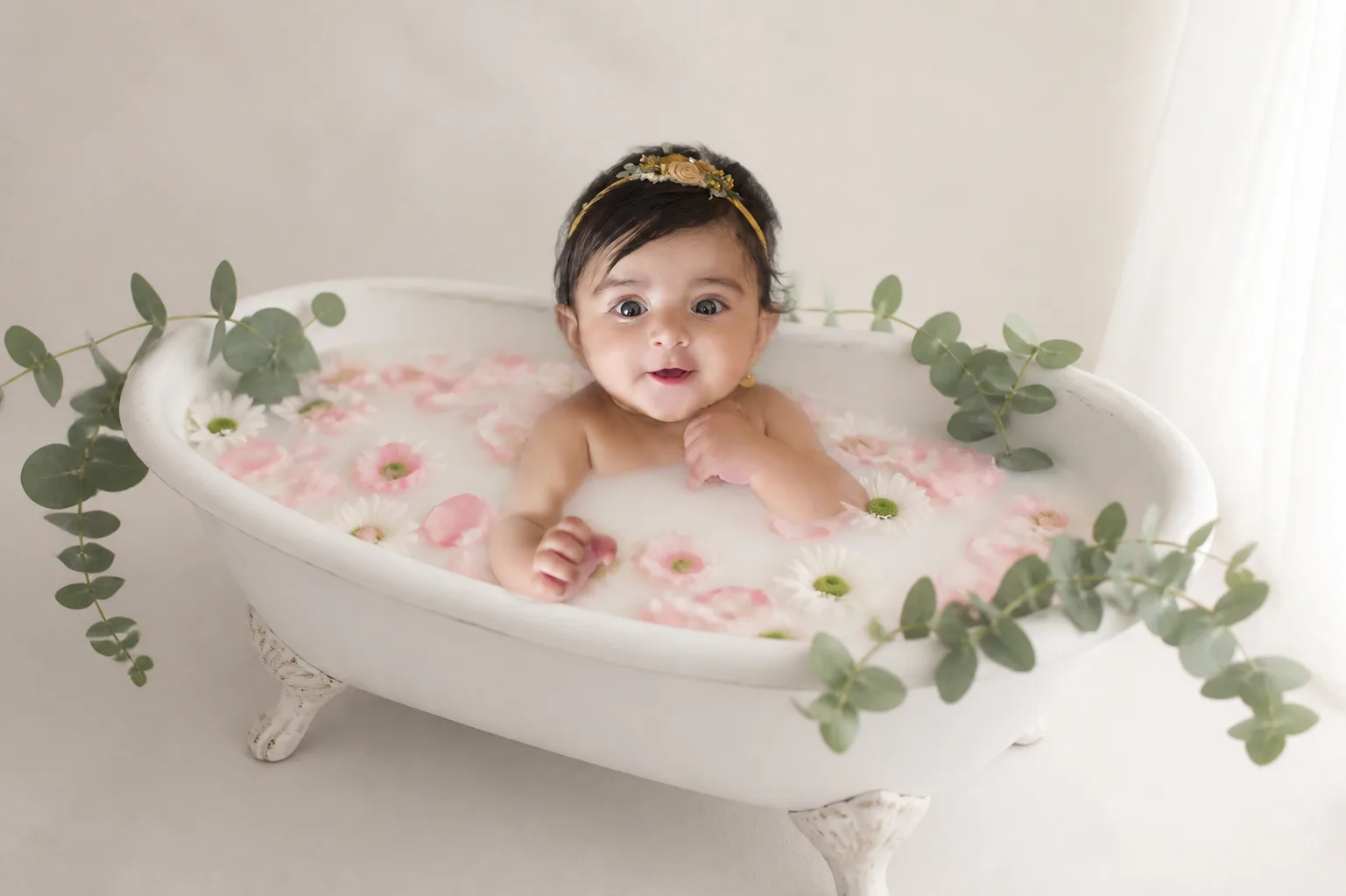
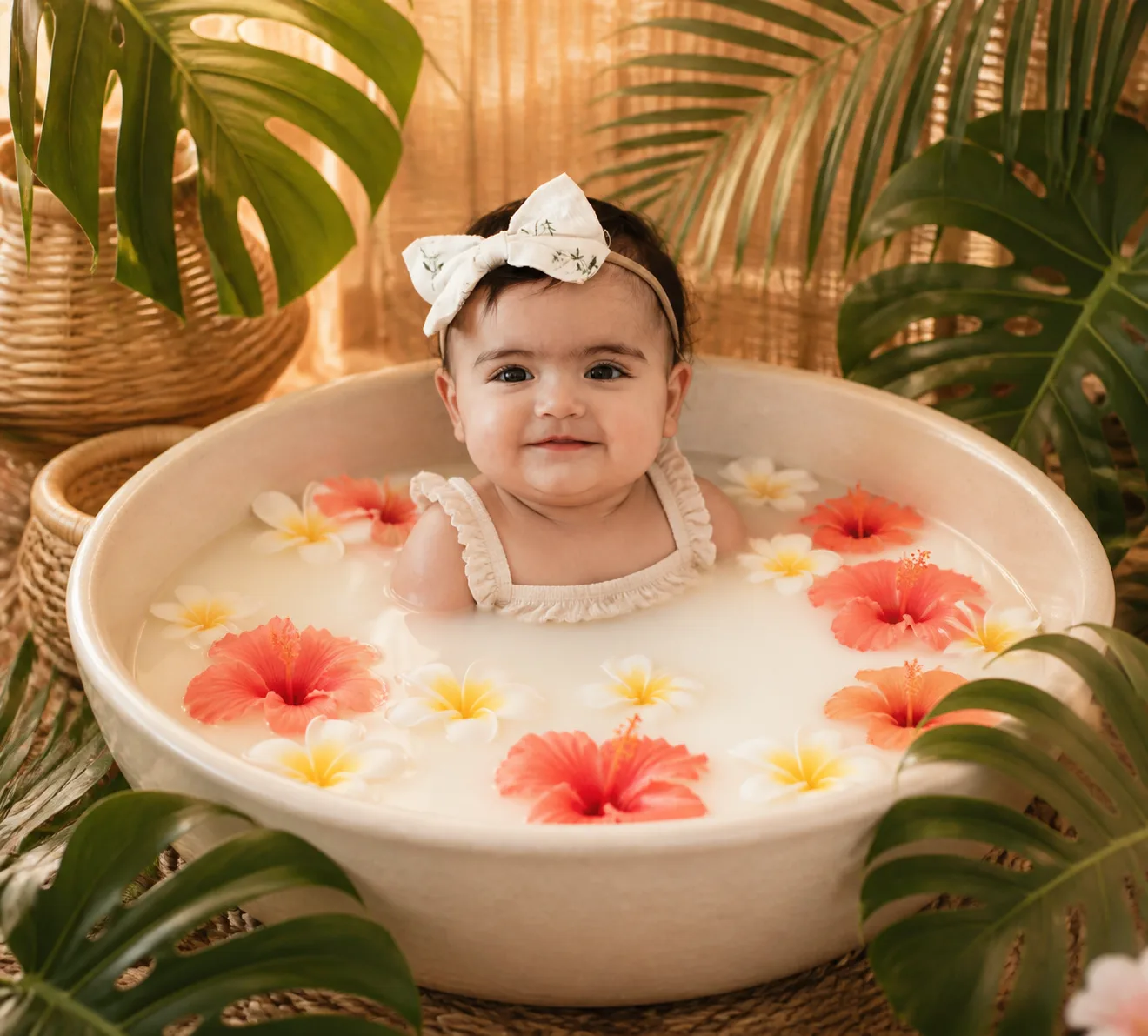
Scenes with clouds, moons, flower nests and tiny props take a studio a long time to build. If you like that look, the AI Baby Photoshoot app is one way to get it from home. You upload one clear photo of your baby's face, choose a newborn theme, and a studio-style portrait is ready in about 30 seconds. The image is AI-generated from the photo you upload. The first photo is free and has a watermark, and plans are available in the app for HD photos without it.
A face photo taken by the window, using the light tips above, works well as the source. Keep taking your own photos too. The real ones of these weeks are the ones nobody else can make.