Baby Krishna photoshoot ideas for Janmashtami at home
· AI Baby Photoshoot
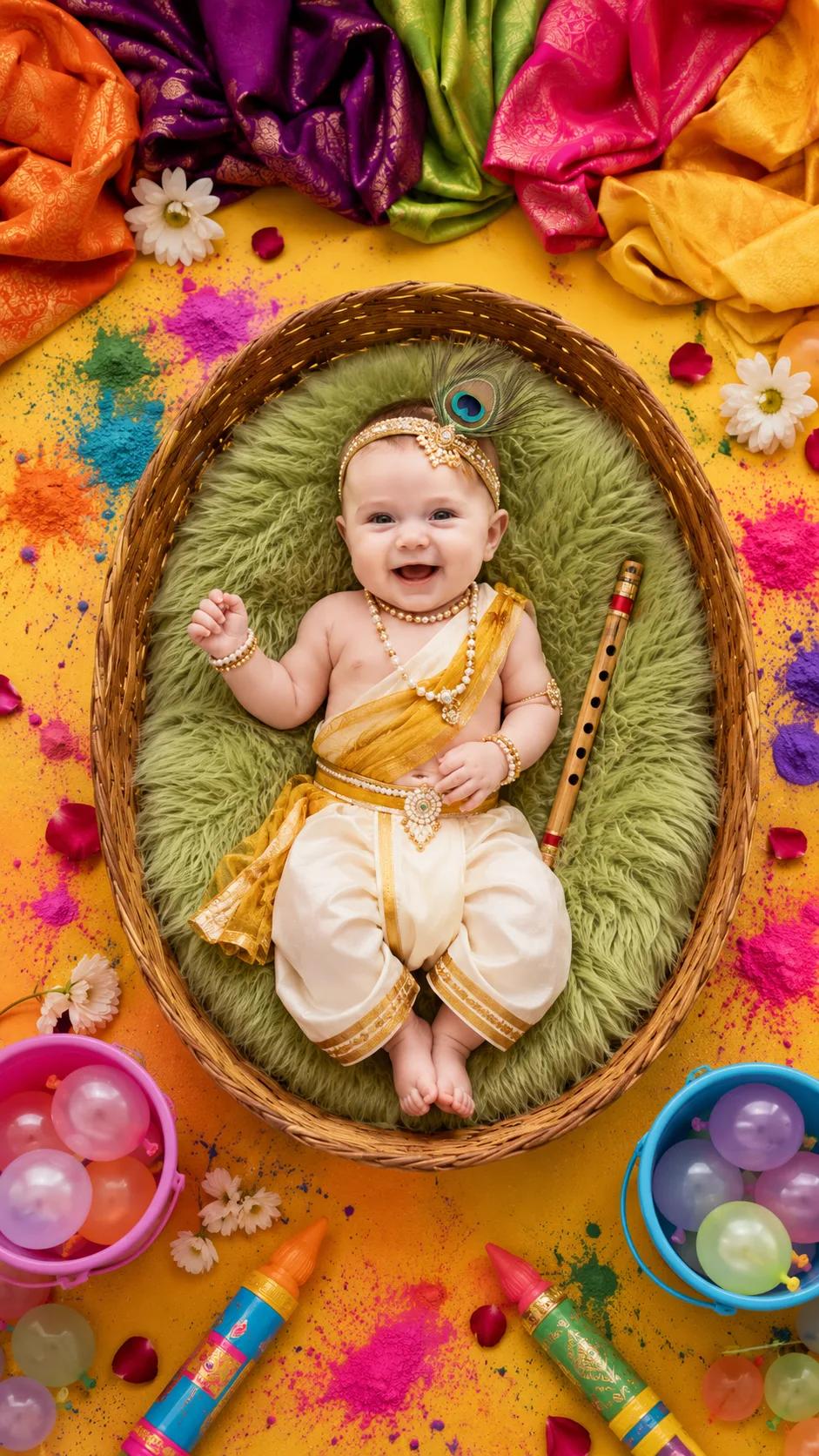
Dressing the youngest member of the family as Bal Gopal is one of the sweetest Janmashtami customs, and a baby Krishna photoshoot at home is how most families keep the memory. You do not need a studio set. A yellow dhoti, a peacock feather, a small matki and a clean corner near a window are enough for a picture the grandparents will frame.
The look comes from a few well-known details from the stories of Krishna's childhood in Gokul. Get those right and keep everything else plain.
The outfit: yellow dhoti, mukut and peacock feather
Krishna is traditionally shown in a yellow dhoti, the pitambar. Ready-made baby Krishna sets are sold in most markets in the weeks before Janmashtami, and a strip of soft yellow cotton or silk tied loosely as a dhoti works just as well. Choose a fabric that feels soft on the skin, as stiff zari borders can scratch.
The mukut with a peacock feather is the detail everyone recognises. A soft cloth headband with one feather tucked in at the side sits better on a baby than a hard crown, which tends to slide off. Tilt the feather slightly to one side, as it is shown in most pictures of Krishna.
- A string of pearls or a light bead mala, kept short
- A small flower garland of jasmine or marigold
- A kamarbandh or a thin gold ribbon at the waist
- Tiny anklets, if your baby already wears them
- A small tilak on the forehead, drawn with chandan just before the photo
Props: flute, matki of makhan and a few more
Two props tell the story on their own. The bansuri, or flute, can be a small wooden one or made from a rolled sheet of gold paper, wrapped with a red thread and a tassel. The matki recalls Makhan Chor, the butter thief. Use a small clay or steel pot, tie a cloth around the neck, and fill the top with fresh white butter, thick curd or cotton wool for the photo.
- A small toy cow or calf, for the Gokul setting
- A decorated jhula or the baby's own cradle with a garland along the edge
- A brass plate with flowers and a diya, kept unlit and out of reach
- A few peacock feathers in a brass lota in the background
Simple backdrop ideas for a home setup
The backdrop should be plain enough that the yellow dhoti and the feather stand out. Blue, deep green, cream and maroon all work well behind yellow. Avoid a busy printed curtain.
- A plain blue or green saree or dupatta taped high on the wall and spread across the floor
- Marigold strings hung in vertical lines against a cream wall
- Banana leaves or mango leaves fixed behind the baby for a garden feel
- The family mandir or the decorated Janmashtami jhula as the setting, with the baby seated in front
- A rangoli or a ring of flower petals on the floor, photographed from above with the baby in the centre
Poses by age, and the best time to shoot
For a baby under six months, lay them on the cloth and place the flute and matki beside them, then shoot from directly above. A baby who can sit will usually reach for the matki without being asked, which gives you the Makhan Chor picture. For a toddler who can stand, hand over the flute and let them hold it however they like. Crossed ankles in the classic pose are a bonus, not a requirement.
Take the photos in the morning or afternoon of Janmashtami, or a day before. The midnight puja is the heart of the festival, but it is dark, crowded and late for a small child, and the photos suffer. Many parents find the baby is most cheerful soon after a nap, so dress them then, add the mukut last, and shoot within a few minutes.
Window light and phone tips
Sit the baby a metre from a large window with the light coming from the side, and switch off tube lights and the flash. Yellow cloth and gold ornaments reflect a lot of light, so tap on the baby's face and pull the brightness down a little until you can see the folds of the dhoti.
- Get down to the baby's eye level for seated poses.
- Use burst mode. A baby in a mukut gives you only a few seconds.
- Keep the whole feather in the frame. It is easy to crop the top off by mistake.
- Take one close photo of the face and feather, and one wide photo with all the props.
An AI Krishna portrait from one photo
If there is no time to arrange an outfit, or your baby refuses the mukut, the AI Baby Photoshoot app is another way to get the picture. Its festive category includes a baby Krishna theme. You upload one clear photo of your baby's face, pick the theme, and a studio-style portrait is ready in about 30 seconds. The image is AI-generated from the photo you upload. The first photo is free and carries a watermark, and plans are available in the app for HD photos without it.
Families often share both on Janmashtami morning: the home photo with the real matki, and the styled portrait for greetings.